Days of Bangkok

Bangkok is well known around the world for it’s nightlife, but there is a lot to do during the day as well, providing you didn’t enjoy the nightlife so much you sleep through it! Amazing street food is found at almost every turn, and the city is rich in culture via museums, temples, and great food.

The Imperial Palace grounds are a great example of this. Be sure to dress with clothing over your shoulders and knees, or you’ll need to buy some dapper $1 pants that should theoretically last at least as long as your tour through the temple. Mine did not, but luckily I had shorts on underneath them. They can loan you clothes if need be if you ask politely. The palace itself is a stunning display of architecture, with numerous temples, sculptures and buildings over a large area. Plan to spend at least an hour here if you want to see everything. Everything is very densely packed in and you can’t turn around without seeing something impressive… and a few hundred people.

It’s really crowded at the best of times, and even in late March it was brutally hot, so bring water. Air conditioning is almost sacred when you find it. There is a minor entry fee as well, but nothing to worry about. Make sure you arrange transportation away from the grounds a block away or so to save about 80%. Good luck finding a metered taxi near the palace.

On the way to the temple we stopped at a few temples and visited a few massive museums filled with sculpture and tools dating back centuries. The collection covers a pretty wide geographic area of SE Asia, so it’s quite interesting. And air conditioned, which is important.

After the palace, it was definitely time to beat the heat and we headed back to the lovely hotel and it’s wonderful mid room Jacuzzi tub which was not left until late evening when we hit up Khaosan road.

Khaosan road goes from night to day from night to day. In the light hours, it’s filled with street vendors selling food and all sorts of goods. I bought a *real* North Face bag there that’s still with me after several countries for only ~$8 after some serious haggling. These vendors are typically open all night, with others selling fried bugs, lewd bracelets, balloons to inhale, and other sordid trinkets.

Speaking of shopping, Bangkok has some truly incredible malls, but don’t expect any stellar deals better than back home. They’re a great way to beat the heat in the middle of the day though, and are quite impressive.

 

A Day in Hong Kong

What do you do when you have a twelve hour layover in a country you’ve never been to? Extend it to 24 hours of course! Flying to Thailand on a three week, four country tour, I was looking for the cheapest airfare I could find. A layover in Hong Kong cut my most expensive ticket in half, and I’ve always wanted to see one of the greatest business centers in the world, so it was a no brainer.

I landed at midnight, and would fly out at the same time the next day. With only 24 hours, I planned on hitting the nightlife for a few hours and then crashing until dawn to see a few of the peak tourist traps. My inability to sleep on airplanes had other plans though, and when I finally reached my hostel at 3 am after a cheap ride on a double decker bus I had a wonderful four hours of sleep and hit the city.

The hostel I stayed at was a bit different than advertised though… when I found the entrance after navigating through yelling drunks and empty streets there was a sign on the door stating that the hostel was completely illegal. Great. Apparently it had been operating this way since 2007 though, so I figured it would be fine. I entered the building carefully. A security guard greeted me silently by holding up three fingers, I took this to mean I either had three seconds to leave or head to the third floor. Naturally I took the elevator.

The atmosphere on the third floor was far more inviting and my fears dissipated significantly. The clerk/owner at the desk was really helpful, spoke good English (I tried learning a bit of Chinese before I left, but didn’t recall much more than Nihow when it came time to use it) and gave me a giant bottle of water. Another worker lead me to my room, which apparently was not on this floor. Or this building. She showed me the complex security code to get into a building on the next block and took me to a large apartment with plenty of full beds and exposed wiring in the hallways. The water came in handy in the morning though, don’t drink from the taps in Hong Kong.

17499473_10103527230179433_2667949881885227389_n

In any case, after surviving the night, I went to see the city. I asked around and the one sight everyone recommended was seeing ‘the peak.’ Victoria peak wasn’t a far walk at all so I took two hours getting there. I took a peek at the old Olympic stadium, which is in decent shape, much more than could be said for the buildings around it. An abandoned hospital and various decrepit athletic fields surrounded an otherwise bustling area. I eventually found the cable car up to the top and was rewarded with a nice hike around the peak and some great (if very smoggy) views. All of Hong Kong is filled with smog/fog. There is plenty of shopping and eating to be done at the peak if that’s your thing. Every big name western brand is there. Big names not being my thing I headed back down the peak to see the markets and street food that was Hong Kong in my mind.

My first stop was the fish street, where you can buy just about anything that lives near or in water in a plastic bag and eat most of them as well. I opted for some good ‘ol meat on a stick. The milk tea in Hong Kong came highly recommended from a friend, and did not disappoint. I must have had two liters of the stuff, it was all I drank there. Don’t miss it. It’s a much sweeter style than in Japan as well.

17424832_10103527230194403_5113775013114271893_n

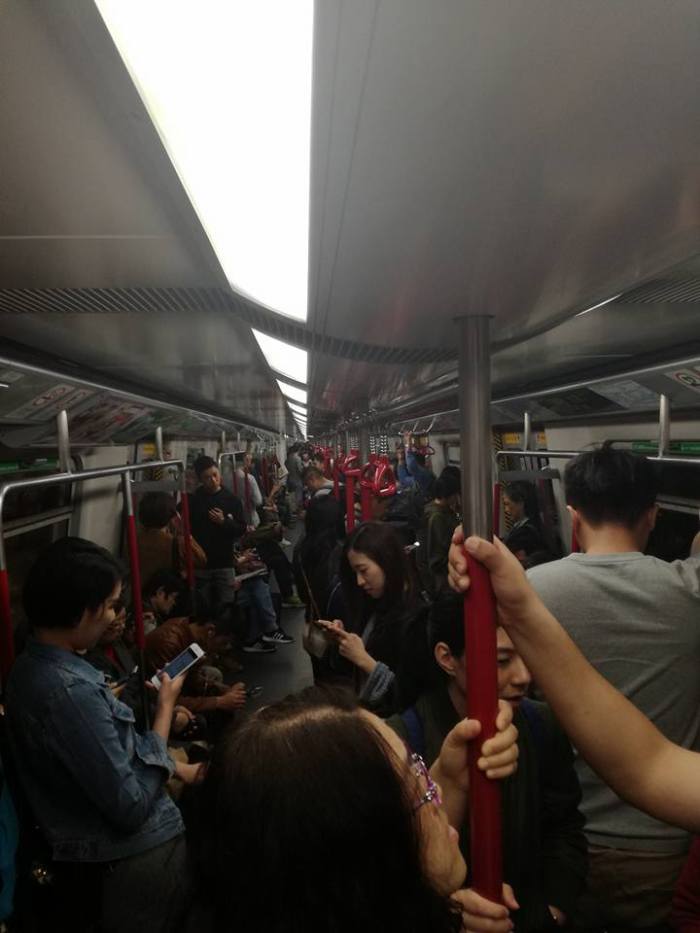
Getting around on the train system is really easy by the way, if a bit expensive. The only frustration I had was the lack of ticket machines/vendors and the absurd walks down to some of the tracks. In some stations you walk so far to get to the train, you might as well have stuck to the surface.

One day is definitely not long enough to see the city, but I had a great taste of Hong Kong while I was there. You can definitely get in and out of the airport quickly as well. The train is only ~30 minutes to Kowloon and ~45 to Hong Kong central. The airport itself is one of the best I’ve seen as well. It deserves it’s own post, to follow.


Tofukuji Temple

A word of warning to those traveling to Kyoto.. the city may look condensed and walkable when you look at a map, but the real story isn’t quite so convenient.


tofukuji1.JPG

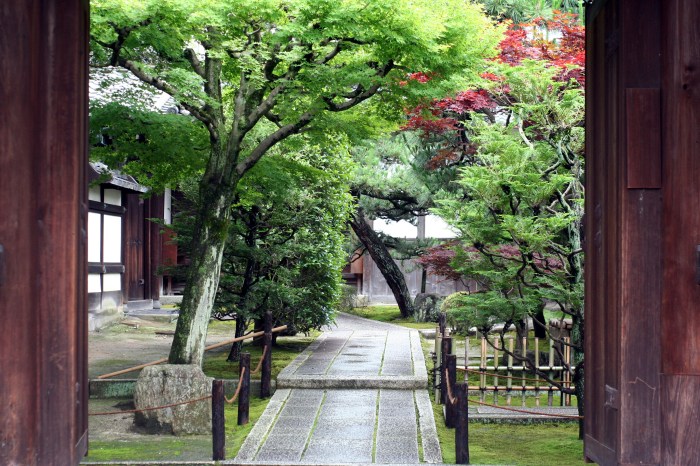
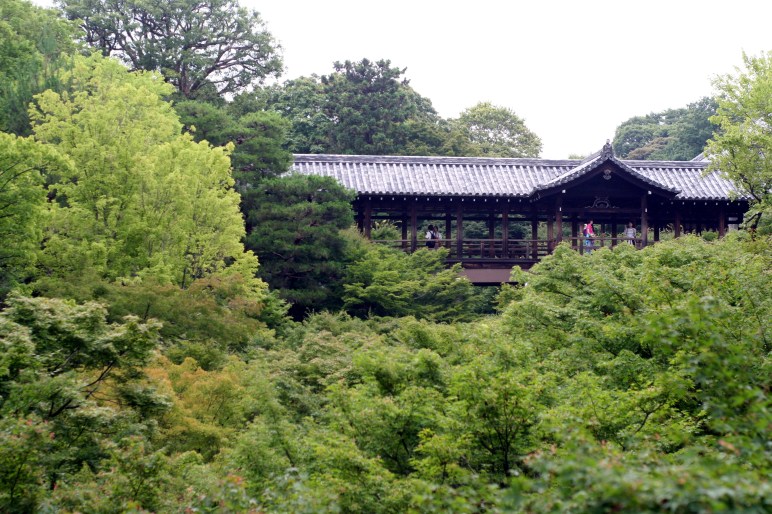
After walking for an hour from our hostel, we came across our first sub-shrine for Tofukuji, of which there are at least seven, all of which are of a respectable size. The temple is massive in scale.. so big I wasn’t able to capture a photo that represented its size well. I’ve found that photography doesn’t capture a lot of Japan very well. Due to scale issues or the ever present humidity I’ve found it to be an uphill battle. Not to mention there are many things I simply don’t take photos of (or I’m not allowed to) which really fill in the details.


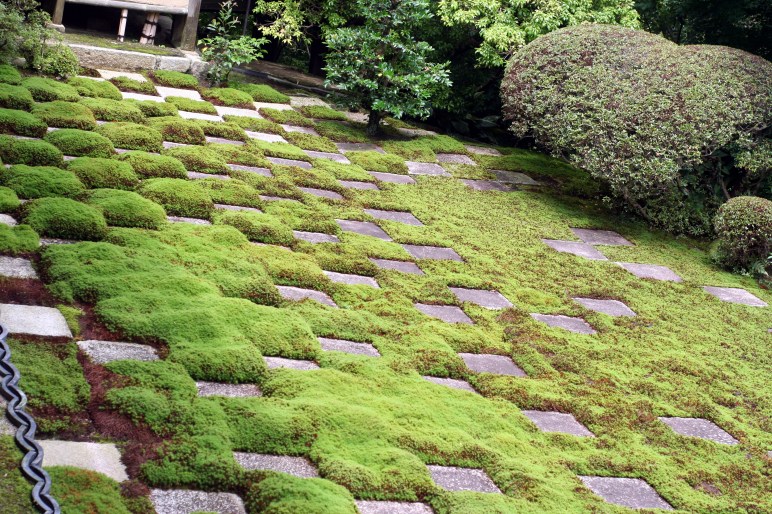
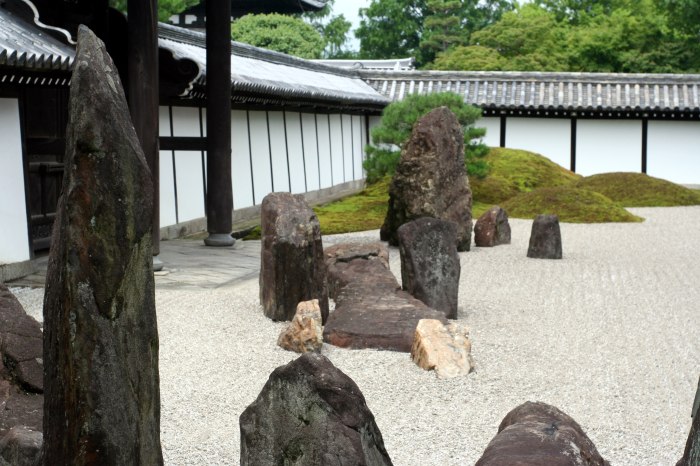
In any case, the temple had a secluded feeling due to it being surrounded by all of its sub-temples, and old growth bamboo. There were displays of carefully tended nature throughout the grounds, with grass or sand or stone very carefully encouraged one place or another. It was subtle and peaceful. Unfortunately most of the buildings themselves are closed to the public, but the temple is a must see in Kyoto.

tofukuji4


The Thousand Year Capital Kyoto

Kyoto is a fine tourist city. Though quite massive in scale it evokes feelings of Aspen in the general vibe of its streets. The city is quite a bit more than a great place for Japanese and foreign visitors to enjoy what was the capital of Japan for a thousand years. Kyoto has a large tech industry in place (Nintendo’s headquarters are here for example) and has several well establishes sake companies that are definitely worth checking out. That being said, tourism is a vital part of the economy here. Hordes of tourists, travelers and schoolchildren come to Kyoto to see the beautiful array of temples, castles and culture that permeate the city.


After arriving by shinkansen, Heather and I stayed at a fine, clean hostel not far south of the main train station. I would really recommend traveling by shinkansen to anyone who visits Japan. Though strangely more expensive than flying (marginally), you have more leg room and comfort and after factoring in skipping security, etc. the high speed trains are just as fast (and more convenient) than flying. The greatest part of traveling by high speed rail has to be the views and the sense of actual distance traveled though. You really get a sense of the scale of the miles traveled when you’re racing along the ground at 200 miles per hour in a way you just don’t get when you’re flying.


Two nights and two days in Kyoto is not nearly enough to see the city. There are simply too many places to visit and the city is too large to see everything. Not to mention the traffic is rather painful. We purchased bus passes for the city which take you to the majority of major tourist spots, but the buses were rather infrequent and took ages to get from one location to another. I would recommend buying a public transit pass (2000 en for two days) or renting a vehicle (car, motorcycle, bike) if you’re planning a visit. The bus pass alone is a great way to save money if time is not an issue though, as you really can see almost anything with it, and it is very cheap at 500 en.


This was the first trip in Japan Heather and I took, and to be honest, it was much needed. It seemed a very rough juxtaposition of worlds when she first arrived; it really didn’t feel like Heather and my life in Japan could coalesce. Going somewhere new definitely made that make more sense. It was a great trip though; I’ll go into detail about each temple and location we visited in Kyoto in later posts, so this doesn’t become a bloated mess. Kyoto is a beautiful place though, and the type of place where you can truly relax as you explore architecture and design of a time long past, even if you are sprinting from temple to castle to shrine.

Ushioda Festival

Full gallery here:

Usioda Festival


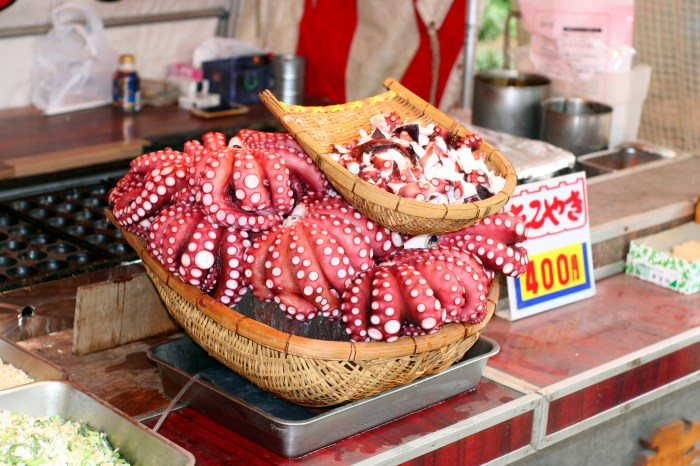
Just a few short miles from my house lies a small shrine by the name of Usioda, and they know how to throw a festival! There were dozens of food vendors selling everything from takoyaki to sour plum candy with everything in between. I had the delightful company of two wonderful Japanese tour guides who made sure that I did not go hungry. Ayane in particular was undefeatable in rock-paper-scissors, winning more than one free entrée.

octopus.JPG

Aside from the magnificent display of food, there were the traditional festival games of paper lottery, cork air guns, and ring tosses, as well as my personal favorite, scoop the turtle (see gallery). The only game where you get to keep the turtles you catch.

The dashi (float) procession was really something to see though. There were quite a few different dashi floating through the festival with some lively men and women hoisting them up and down. The main event is the cover photo for this page, where the omikoshi is hoisted up and down and spun around in front of the shrine. These dashi weigh a lot, so this is no minor feat. This is immediately proceeded by those carrying the float to charge down through a crowd onto the main roads carrying the float. It was an amazing experience.


A walk in the park… and Tokyo

Tokyo and Koenji June

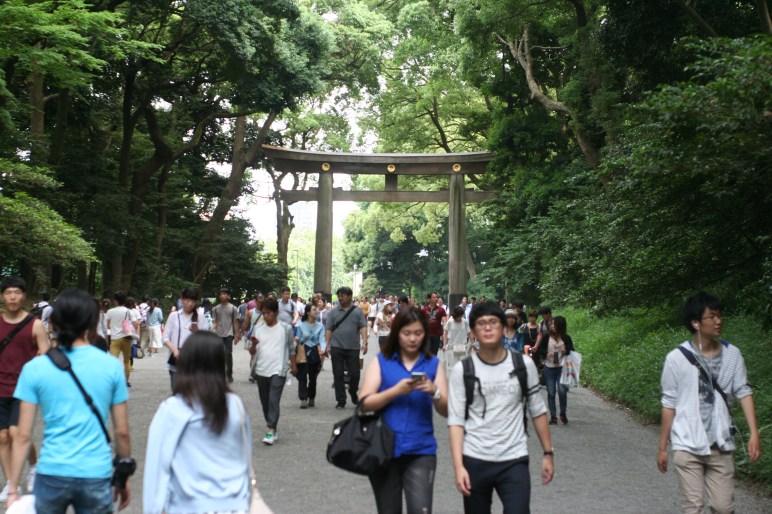
Last Saturday I woke up at the crack of noon and headed to Tokyo to see the sights for a bit. I stopped at Harajuku first and spent a few hours wandering through Meiji shrine and Shinjuku Goen. The scale of these parks is incredible when you consider the city that surrounds them. Walking around Meiji I felt transported back to the old forests of Virginia when I was a kid. I’m not sure if it is intentional or not, but Japan has spaces of near silence even in the busiest of places. It could just be that I have learned to tune out the hustle and bustle at times, but whether in my hometown of Tsurumi or the wild city of Tokyo, a place where you can take a moment and breathe is never far off.

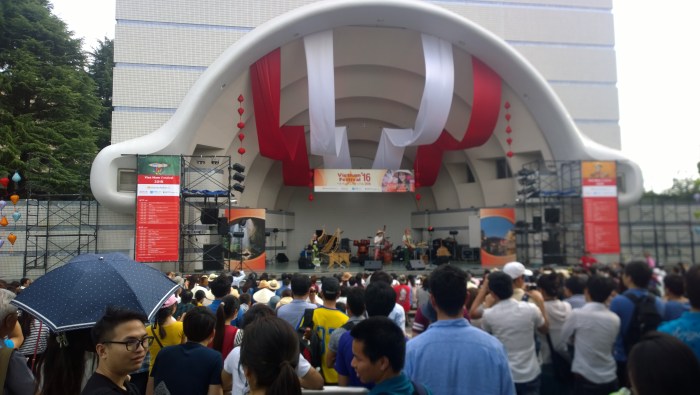
Before meeting up with a friend I stumbled into a lively Vietnamese festival near Yoyogi. Naturally I couldn’t resist a bit of Bahn Mi. There were several dance groups and musicians performing at the festival as well. Though I didn’t stay long I managed to get some decent footage of a band featuring a t’rung, which is a sort of xylophone.

WP_20160611_16_16_57_Pro__highres

Leaving the festival I met up with a friend in Koenji, which from what I could tell is a used clothing mecca. There were tons of off the wall shops and cafes dotting the area and it was a great place to just walk around and relax. Clothing I might add, is quite expensive in Japan. A used shirt often runs over $20 for a tee for example. Don’t get me started on buying/finding shoes in a U.S. size 12.

IMG_4481.JPG

We moved onto Shibuya afterwards and met up with the rest of the crew to go to a Japanese nightclub. Unfortunately, the club had shut down and the other clubs in the area closed at midnight for unfathomable reasons. The night wasn’t a loss though, as exploring the Japanese red-light district is a pretty great adventure unto itself. There is certainly something for everyone there who is willing to pay for it. Seedy backalleys and cheap curry later we all headed home. Expect more about Tokyo soon!


Mt. Oyama

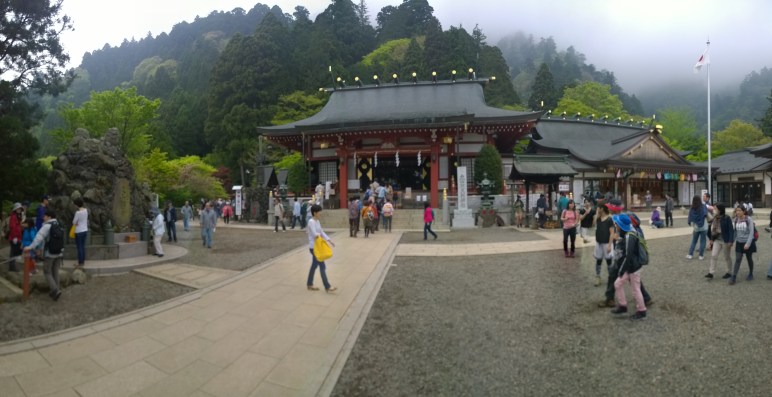
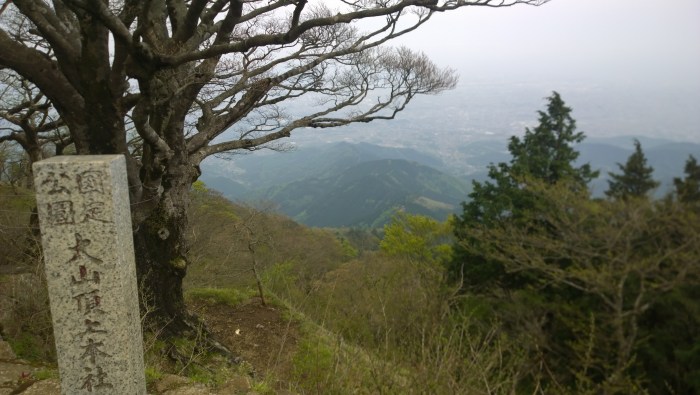
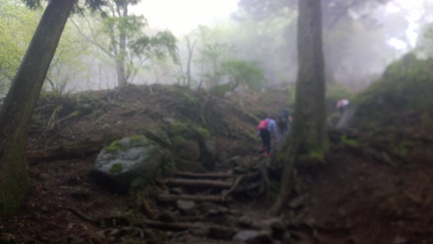
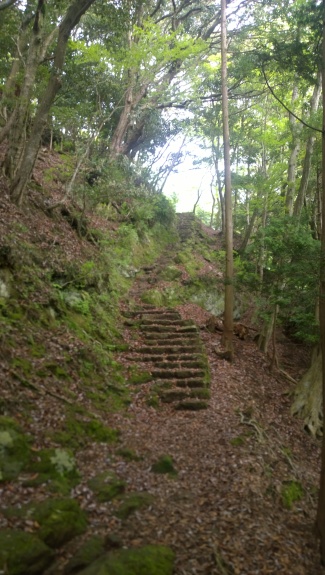
A few trains and buses away from Yokohama lies the town of Isehara, with some good restaurants and izekaya, and a famous mountain. Mt. Oyama literally translated is yama oyama… or mount big mountain. It certainly lives up to its name when you first see it looking from the train. While it isn’t exactly the biggest mountain in Japan at 1,250 meters (a bit over 4,000 ft), the climb is definitely a vigorous one. We took the “men’s route” up the mountain which primarily consists of ladder like staircases and many shrines. There is a cable car available as well if you want to skip about a third of the journey and much of the steeper terrain.

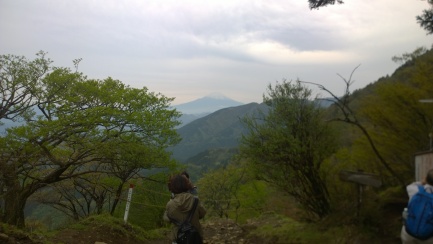
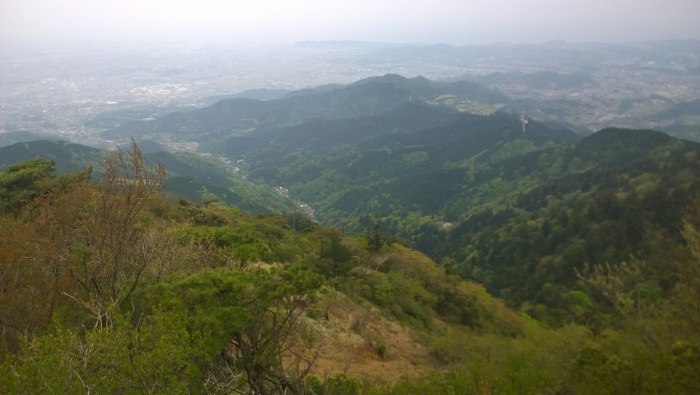
The views are amazing throughout the hike and we could even see Mt. Fuji in several places despite the thick fog! Oh, a note on that, bring a light jacket with you, you’ll want it for the top.  The full hike roundtrip runs around 4-5 hours or so at a decent pace, including a lunch break of Japanese baked goods. There are some picnic tables at the top and along the nature view trail where you can stop for lunch. We opted to join some fine folks on a log after the Fujimidai viewpoint.

WP_20160503_14_55_54_Pro__highres
The summit

WP_20160503_13_12_00_Pro__highres

WP_20160503_13_54_31_Pro__highres
Hiking through the fog


WP_20160503_14_22_54_Pro__highres
Mt. Fuji in the distance

WP_20160503_15_26_48_Pro__highres

WP_20160503_12_17_21_Pro__highres
Isehara, famed for its tops and tofu
WP_20160503_12_44_44_Pro__highres
A few of the 1000 or so stairs leading up the “men’s trail”. It’s difficult to tell from the photo, but they are quite steep, and a bit slick as you hit the fog higher up


WP_20160503_16_32_22_Pro__highres
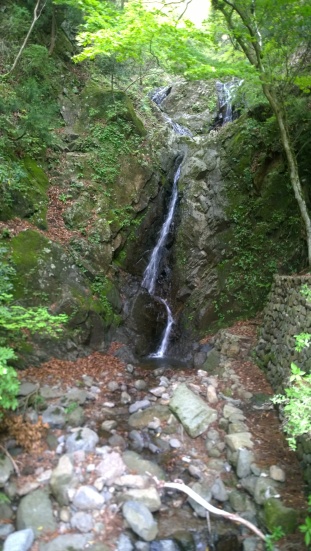
Niju falls


Mount Takao

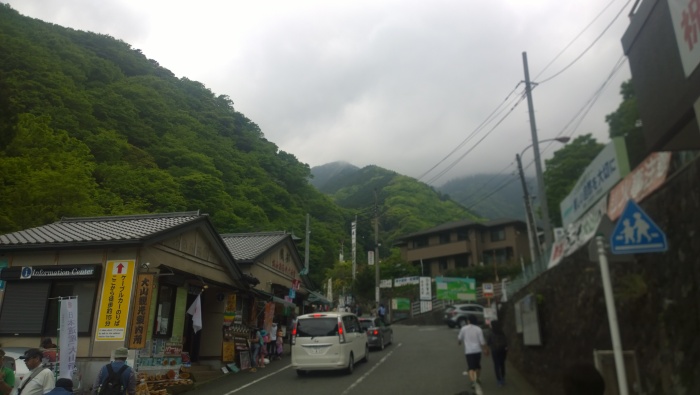
A short train trip from the busiest station in Japan takes you to the base of Mount Takao. It’s a great day hike if you are looking for a relatively easy hike that you can start in the afternoon. There is a a beautiful temple, Yakuo-in, which should not be missed if you’re hiking Takao. I recommend hitting it on the way down the mountain as we did, so you can enjoy the views on the more arduous ‘A’ route. You could also cheat and ride the cable car if you’re shy on time, but that’s no fun.