Phuket City, Thailand

After a hectic 24 hours in Hong Kong I hopped on another flight to Phuket, the gorgeous beach destination whose beaches and islands give Thailand it’s stellar reputation. While most of Phuket is heavily geared towards the tourist and beach scene, Phuket City offers a more laid back old town experience. I met up with the ever lovely Heather and after a brief stay on the sunny beaches of Naithon, we headed to Phuket City.

Naithon beach is a great place to stay close to the airport by the way. It’s around a twenty minute ride from the airport so it’s perfect for late flights (I landed at 2 am). I learned the first rule of Thailand while I was looking for a taxi, always haggle. I was first quoted a rather high price by a driver with a map. I looked at his map and the price he had there was half of his quote, so I offered him half of the map price. We settled in the middle and I was soon at the hotel.

<blockquote class=”imgur-embed-pub” lang=”en” data-id=”a/cI3bQ”><a href=”//imgur.com/cI3bQ”>Phuket City, Thailand</a></blockquote>//s.imgur.com/min/embed.js

Taxis, tuk tuks and haggling

Every single price you’ll find on the street is negotiable. Never pay the first price you’re offered unless you’re really rolling or looking to make some locals very very happy. If you can get one, a metered taxi is less than a tenth what it might cost in the US and offers the blessed gift of air conditioning. If a taxi driver refuses to use the meter, just say no, it’s a bad call.

For tuk tuks, you negotiate a price and route beforehand. Have some fun haggling and you can get a good price and the great open tuk tuk experience. Costs will go up as the night goes on; drivers want to get home and make money too, so plan accordingly. Most drivers are willing to spend a good portion or the whole day as your driver if you offer enough. $30-$40 is usually more than enough to secure this service. You can also get discounts or even free rides if you agree to have them take you to their friend’s shop. Be warned though, you’ll be paying one way or another.

Thailand is a great place to get custom clothing made though, if you have the time I would really recommend it. Haggle here too of course. I had a suit made over a couple days and with two shirts and pants I had a very high quality suit, shirts that actually fit right (I’m 6’3″ and live in Japan…) for less than a cheap off the rack at home. Scheduling more than one fitting is a good decision when getting a custom suit or dress made. Once the tailor has your sizes, they will happily make you clothing and ship it to your worldwide as well.

Food vendors usually have already low prices, but if anything seems high, always talk them down. Most people will charge what they can, and if you don’t care that could be 5x the typical value. Souvenirs are of course negotiable, if you can’t talk a price down, ask to have something else thrown in and you’ll usually both be happy.

Massages, pedicures, etc are usually relatively fixed prices, but more than fair. Treat yourself. A thai massage is an absolute must while in Thailand. Prepare yourself though, it feels like you’re getting beat up for an hour or two.

Bottom line, if a price is higher than you think it should be, negotiate it to what you consider fair. I enjoy the haggling process, but if you don’t, at least offer one alternative price before you buy.


To the city

After some fun in the sun at Naithon beach, we snagged a long distance cab to Phuket City center and decided to stay at the central hostel in town, which was a phenomenal choice. We had a great room with high ceilings with a balcony overlooking the main street. We liked the room so much we stayed there three nights. We happened to arrive the night of the night market in Phuket City, where the street is filled with live bands, incredible food, and a medley of vendors. We feasted on Phad Thai, bbq pork, and even horseshoe crab (a crunchy experience…). Of course, this was accompanied by many bottles of Thailand’s wonderful Chang beer. A rich beer served iced cold… or even with ice in it, it’s strength varies quite a bit from bottle to bottle, so be wary. Overall, my favorite Thai beer though.

The principal reason we went to Phuket was of course, for the beaches. Specifically we wanted to do some diving. Heather finished her certification here, so we were limited to what dives we could do, so we dove Ko Racha Yai and Ko Racha Noi. These were some great experiences thanks to the crew of Aussie divers. I would highly recommend them, especially for new divers or those looking to finish out their certifications (PADI). Although the water wasn’t the clearest I have ever dove, the visibility was still excellent. We saw a myriad of fish spp. octopi and other sea life while diving damaged (but healing) reefs,  coves, and even a shipwreck. Thailand has been putting a lot of money and effort into conserving it’s natural resources after a long period of poor management, and the artificial reefs seem to be helping. Hopefully with diligence the ecosystem can return to it’s former glory. Next time I head to Phuket, I’ll probably stay on a live aboard and concentrate on diving, there are weeks worth of diving in the area, and most are pretty far from the mainland.

We spent our last day in Phuket chilling at Patong. Patong is a great beach, and a party town. The nightlife here is excellent, and offers something for everyone, but caters more towards wild partying than subdued nights. The beach is excellent as well, so kick back, put up an umbrella, and snag a couple drinks from the patrolling vendors (don’t worry, they’ll find you).

If you want to party and be close to major dive companies, stay in Patong. If you want to relax in an old town type setting, I’d recommend Phuket City. Either way, you’re going to have a good time in Phuket.
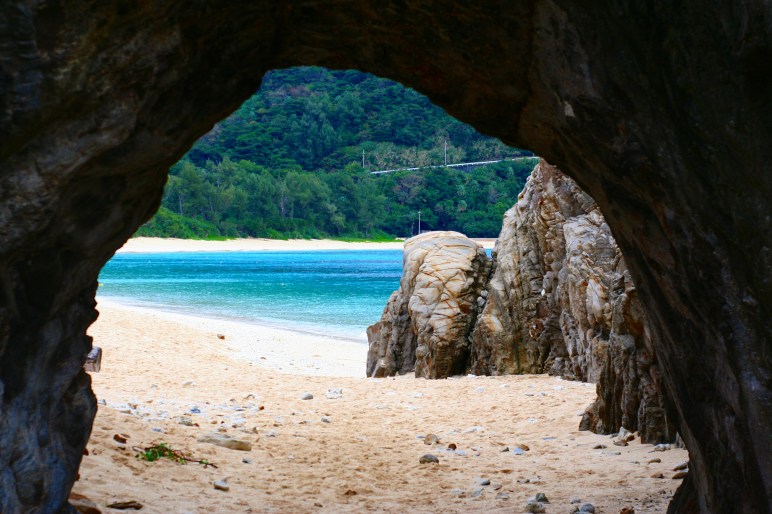


Okinawa and Tokashiki Island


There aren’t many better places to sneak off to when winter is bearing its fangs than a beach and warm clear water. I really recommend anyone feeling the need to get away from the cold to just head south a bit from wherever you are, even if it’s only for a weekend. Flights can be found for cheap these days, and with a bit of creativity and an open mind, lodgings can be had for fractions of the costs of traditional hotels. Many places in the northern hemisphere have their ‘off-season’ in the first few months of the year, but they are still amazing to visit, with the benefit of ditching the crowds and discounted prices at many places. Some services and shops don’t open of course, and you might need to bring a light jacket, but I would say the benefits outweigh the slight negatives.

Okinawa is wonderful in January. I stayed for three nights and the weather rarely dipped below 25 Celsius (70s in F). It rained on and off sporadically while I was there, but that usually just presented opportunities to make new friends while waiting out the rain. Or, protip, if you’re underwater, the rain doesn’t matter much. I spent the entirety of one storm scuba diving with a great company.


Speaking of diving, the prices were really reasonable for basic dives. I paid ~$85 for a two-hour (one under) boat dive around a coral bay. I dove in the gorgeous waters of Tokashiki island, which are so blue the Japanese have a special name for the color. The water was also the clearest that I have ever dived in, perhaps sixty-foot visibility. There were some impressive fish and octopi around the corals, even though this time of year the area is practically barren relative to the summer, according to my dive lead. January is the peak time to see sea turtles and whales around Okinawa though. I met a nice Japanese couple, both teachers, who saw (from what I could deduce between my terrible Japanese and their good English) several humpback whales and sea turtles from a boat nearby. I did not unfortunately, see any sea turtles or whales. Sea turtles are my favorite animal as well. I ended up meeting the couple and their son again on the way to the airport and they were kind enough to invite me into a club while we waited for our flight; nice folks.


Tokashiki itself was a beautiful island that I would not have minded spending more time on. A short ferry ride (one hour or 30 min depending on if you take the ‘slow’ or jet ferry) brings you to the island. The ferry only runs a few times a day though, so I would recommend planning out your activities or staying the night. There are accommodations available there, both cheap hostels and hotels, as well as scooter rentals, and you could spend several days relaxing there with a full schedule. If I return to Okinawa, I will definitely make it a point to see what the island offers at night. Some friends I made at the hostel stayed there one night, and gave good accounts. The beaches are wide, the water is warm (in January, a wetsuit is optional) and there are plenty of places to rent whatever equipment you might want. The surf wasn’t terribly impressive at the beaches I went to, but apparently, there are decent places to ride some waves. The restaurant near the ferry is definitely worth checking out by the way. I had some solid curry udon, with a complementary ‘pumpkin’ (read: squash) soup that was some of the best I’ve ever had.


The hostel that I stayed at, Sora, was a great deal at ~$11/night for a shared room. Full services with washer/dryer, shower, etc. and recommendations and references to anything you might want around Okinawa, whether that is a tour, aquarium trip (incredible aquarium north of Naha), vehicle rentals, or restaurants. The staff is very friendly and so were the guests. I actually ended up meeting up with some of them in Tokyo a few weeks afterward for some delicious ramen. I’m not sure if they offer private rooms though. If you want, there are many options for accommodations in Naha, from open tatami mat hostels for less than 10USD to full hotels and ryokan. Sora is a great spot though, located near the monorail, downtown, and the ferry docks.


Okinawan food is a crazy and delicious meld of Ryokan, Japanese, Chinese, SE Asian and American cuisine. Local specialties include squid ink rice, goya/bitter melon, taco rice, uni-budo (salted seaweed-DIP THIS IN SOY SAUCE PLEASE), and Okinawan soba, which is a much more processed noodle than what you will find in the northern parts of Japan. On my first night here, after spending the day at Tokashiki, I went out for a ten (?) course meal with some people from the hostel and we were able to try a great assortment of local fare for less than $30 with nomihodai. Oh, the Okinawans are naturally big on seafood. On my last day, a group of us went to the fish market and had some seriously delicious and fresh seafood. I tried an Okinawan bitter melon beer here as well, which was pretty interesting. The bitter melon has a sharp bite to it that fads quickly and smoothly, and it is no wonder that it is a local favorite. The local liquor is awamori, made from Thai rice, and has a flavor similar to shouchu.. or a mild whisky. It is occasionally bottled with a viper, just for added fun and discomfort. Definitely worth trying while here. Speaking of drinking, after the meal, we went out for a nightcap and after shying away from the more interesting districts in town, ended up at a shooting bar. You could choose between a variety of dozens of pistols and semiauto airsoft rifles to shoot down a gallery set up alongside the bar. A fairly ridiculous concept that is really fun in execution. Check it out.


My last full day in Okinawa was spent visiting castles, shrines and museums. My first stop was Shuri castle, rebuilt after WWII, the castle takes up an impressive amount of real estate of the relatively small area of Naha. Walking the outer walls takes the better part of half an hour, and the gardens outside the castle spread quite a way down a river. The main portion of the castle is in vivid red and gold, and the whole grounds hold a relaxed, unhurried feel that went nicely with the warm day (sweating in January is excellent). I attended a tea ceremony in the castle looking out into a coral garden which was really relaxing. They served a type of sweet Jasmine tea with an assortment of cookies and sweets, including chinsuko, which tastes like shortbread, and various simple fat and sugar cookies in intricate designs. If you go to the castle, definitely attend a tea ceremony, they should not be skipped. Plus, the fee was only 300 yen (<$3).


After Shuri castle, I made the terrible mistake of deciding to walk to the imperial gardens “nearby”. Two hours later, I had seen some impressive graveyards, highways, ate some great katsudon (deep-fried pork and egg over rice), and was seriously regretting my decision. Once I got to the gardens though, the sweat was worthwhile. Once a second home for the Ryokan royal family, the gardens retain the peace and tranquility they once had. The main attraction here is the pond, with a carved stone and coral bridge crossing it, and the main house which was an intriguing snapshot of how the past kings of Ryokan spent their leisure time.


I spent the rest of the day traveling to shrines and museums, too many to go into here. A highlight was the Fukushu-en garden, next to the Confucian shrine, a large garden filled with sculpture and carved rock. The focal point is a pagoda on top of a massive carved stone, with a waterfall off the front face. You can walk inside the stone in a series of black tunnels, which is worth the entrance fee alone. Oh, a note on that, you can avoid the fee as a foreigner apparently. Not that the 300 yen is going to break the bank. Naminoue shrine was a great spot as well. It is remarkable to look at, built on a cliff above a beach. The temple was in the process of collecting and burning last years’ charms while I was there, so it was quite crowded, and I didn’t linger, but if you find yourself in Naha at the very least I would look up at the shrine from the beach below. Especially as the other view from the beach is the highway overpass.


On a more personal note, the past few months have been incredibly trying for me and my family. To be honest, I’ve never come up against a challenge as great as the one I’m going through now, and some challenges just can’t be solved head on. I have always found the ocean to be a restorative place for me though, both physically and mentally. I spent less on this vacation than I spend a month on transportation, and it was sorely needed. The incredible waters of Okinawa definitely brought me a bit of peace.