‘You are wise to climb Mt. Fuji. You are a fool to do it twice’ ~Japanese Proverb
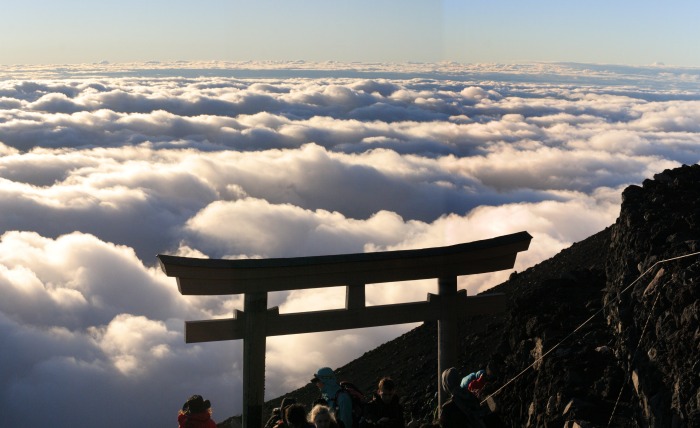
Climbing Mt. Fuji is the dream of many around the world. The mountain is featured in countless drawings, ads, and photos of and in Japan, and I am hard pressed to think of a better known Japanese icon. I even own a pair of socks featuring the mountain. I have wanted to climb Fuji since I was a teenager, and I almost missed the climbing season this year. You can climb the mountain outside of the season, but the dangers are significant and you need the proper gear, which I don’t have in Japan. People have been known to have been literally blown off of the mountain. Even climbing in the ‘season’ the mountain is not a day hike. You gain a serious amount of elevation and are above treeline for some time before you reach the summit.
I chose to climb the subarashi trail instead of the more popular yoshida trail for a few reasons: the principal being that you avoid the crowds, with the subarashi trail having less than 20% of the traffic of the yoshida trail. The trails meet up at the old 8th station, and the trail instantly went from a solo hike with a few friends every few hundred meters to a line of people shuffling up the remainder of the mountain. The subarashi trail also boasts the highest treeline of the four Fuji trails and you can see the sunrise from the trail if you didn’t make it to the summit by sunrise for whatever reason.
Now, this trail is less crowded for a few reasons though. The 5th station, where you start, has very few services, basically a restaurant, gift shop, pay toilet, and a conbini of sorts. The restaurant does kindly give you a small cup of hot mushroom soup before and after your descent, and I gratefully received mine. The yoshida trails fifth station is a small town on the other hand, with restaurants and even onsen… and lockers. I was counting on using one before I set up the trail, and so set off with a heavier load than I wanted to. The subarashi trail also starts at 2000m versus the 2300m starting point of the yoshida trail, although they both end at the 3,776m (12,388ft) summit. This extra distance was actually a small selling point to me though, as I would get to see more of the mountain (note: since I climbed through the night, this didn’t really matter).
The terrain of the trail consists of volcanic dirt up through treeline, which gives way to sand and stone as you ascend. Between the new 6th and new 7th stations, the trail is really sandy, and the going is tough, but this soon gives way to rocky terrain up through the summit. After merging with the yoshida trail at the old 8th station, the trail is quite well worn and easily traversed as it winds its way up the mountain. The subarashi trail is quite steep throughout though, so don’t go expecting a casual stroll. When it’s all said and done, the subarashi trail takes you up about 6000 vertical feet. I did this climb from 7:30 pm to 4:00 AM, stopping approximately half an hour at each go (station) to avoid altitude sickness and as my pace was crazy fast (about double the suggested pace) until I reached the 7th station three hours earlier than I expected.
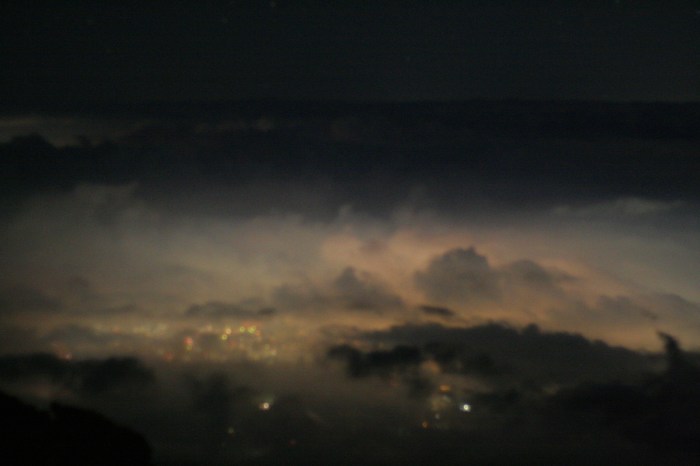
The actual climb was breathtaking. I arrived at the fifth station around 6:45 and spent some time picking out a hiking staff to be branded along the trails. I had a brief snack and enjoyed the complementary mushroom soup from the station staff, rested for thirty minutes, and set off. There is a suggested fee of 1000 en you pay before or after you climb the mountain. This is technically optional, but you’re enjoying a beautiful natural resource, and $10 plus a lot of sweat really is a good deal for the experience. I hiked through the forest for a few hours at a good pace, seeing absolutely no one until I reached the first station (the old fifth). I sat down with a nice Japanese man and exchanged some gifts of beef jerky and sports candy (this stuff is awesome! See supplies section). We chatted in my poor Japanese and his poor English with the aid of google translate for a half hour and went our separate ways, although we would catch up for a few minutes at each station until I outpaced him. I met some French students here as well. It was nice seeing the same people at each station as you progressed up the trail.
I continued to make my way up the mountain at a fast pace, taking breaks to stargaze and appreciate the awesome fiery glow of each station up the mountain. These seemed an impossible distance away on the ascent, but were realistically only a few hundred vertical meters apart. I stopped at the seventh station for some food, and was given a salmon onigiri by an overstocked fellow climber. This was good, as I had severely underestimated how much I would eat on this climb. All in all, I ate four hardboiled eggs, a package of beef jerky, the onigiri, a bowl of udon and beef, and a box of less than appetizing calorie mate, a high energy food replacement. Pro-tip, don’t get the cheese flavored black box. I realized that I was severely ahead of schedule and would hit the summit around midnight if I kept my current pace, so took a two hour nap/rest on some comfortable rocks before continuing. I shortly hit the old eighth station and merged onto the yoshida trial, and my pace was cut in 1/4. Which was good, as I was still due to hit the summit hours early.
Most climbers climb Fuji in two days, with a rest or stay at one of the many mountain lodges on the mountain. This ranges from 3500 to 8000 en depending on where you stay and if you want meals. I decided to save the money by ‘bullet climbing’ the mountain and this was a good choice for me, but less experienced hikers and climbers should opt for the stay.
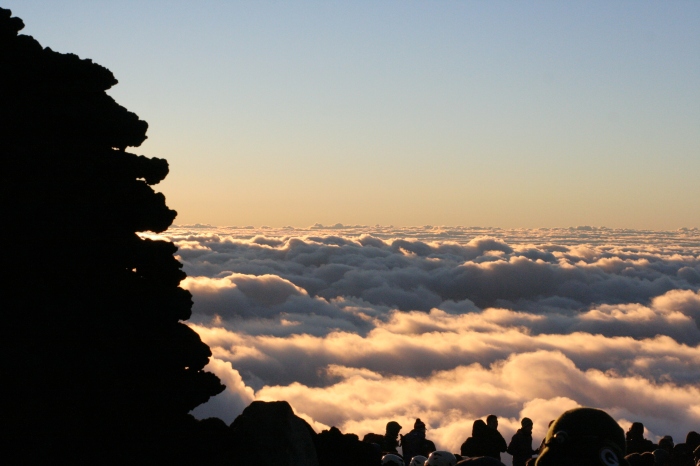
I arrived at the summit at four am. I chatted with a few Americans and Japanese while waiting for the sunrise to start, overlooking the unkai (sea of clouds) on wooden benches. The moments leading up to the sunrise were perhaps the most magical part of Fuji. Watching the gorgeous starscape be slowly eked away by a rising rainbow of blue and gold with hundreds of other people who had just made the climb you had was an astounding experience. The sunrise itself happened so fast you could almost have missed it, if not for the collective gasp from the audience of climbers of all ages. It is clear where the inspiration for the Japanese rising sun flag came from here, as sunbeams pierces through the sea of clouds and the great orange sun showed itself. I’m still thinking about the sunrise today.
I didn’t linger long on the summit, just long enough to get a few hundred photos and a can of boiling lava to represent the volcano. Ok, it was hot chocolate, but I could barely hold it with my gloves on! I went the whole way down with a new friend, a student studying chemistry in Tokyo who ran after me to catch up. The route down the mountain was a never ending trail of sand at an impossible angle. I looked off the mountain once at the clouds and was puzzled at the strange angle they were cutting into the sky, until I realized that I was standing at a steep angle to the slope and the hill was a far more impressive incline than I had realized. My new friend encouraged me to take part of the hill at a ‘subarashi run’ which is letting gravity take you down the sandy gravel at a deadly rate until you get too scared and try to stop. Good times.
I have no idea the last time that I have been so exhausted. I slept on the bus back to Gotemba, I slept on the three trains home, and when I arrived at my apartment, I slept for seventeen hours until the following Sunday. The exhaustion is absolutely worth the experience.
And I just might be a fool, because I want to climb the mountain again.
My trip route:
Yokohama station to Gotemba station by train 1500 en
Round trip bus to the 5th station 2000 en
Climbing Fuji, priceless (ok 1000 en)
Suggested supplies:
Wicking underwear top and bottom
Water, 2L +
Sports candy (salt suckers basically, get them)
Food (I would recommend 2000 calories in high energy food)
Winter jacket
Rain gear
Winter hat
Sunglasses
Hiking stick (buy a staff, it’s a great souvenier)
Quality boots with gaiters
Wool socks, 3 pair
100 en coins for pay toilets, etc. Bring 10000 en to be safe (not all in 100 en coins…)
I found this link to be very helpful if you’re considering the climb:
http://www.garyjwolff.com/climbing-mt-fuji.html

 Yonder Sonder